"Her subject is reality, her great drama is her life, her love, and her death."
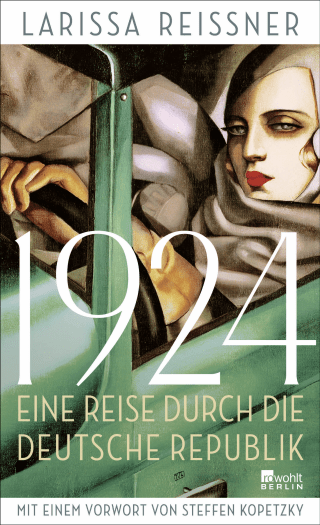
Larissa Reissner's 1924 journey through Germany offers a fascinating, colorful kaleidoscope of life a century ago. Born in Berlin-Zehlendorf, this revolutionary was a unique observer: she was present at the now-forgotten Hamburg Uprising, describing the dramatic events and the plight of workers. She then traveled to the Ruhr region and Berlin, the engines and giants of modernity, shedding light on the everyday life and its tragedies that the powerful ignored, all while recounting their stories. She visited the Ullstein publishing house, recognizing the spirit of the new mass media. Her critical yet fascinated descriptions of the Junckers-Werke and Krupp, the mighty industrial giants, paint them as "national German treasures".
This results in an insightful portrayal of the five-year-old Weimar Republic, already showing cracks. Supplemented by reports from other parts of the world, it creates a panorama of a tumultuous, hopeful, and torn era closer to us than we might think. Reissner's splendid reports from the era of the world revolution, edited by Steffen Kopetzky, who provides a foreword, are a significant rediscovery.
"We have never had someone like you. We would really love to have someone like you. Someone who loves and hates. You have been a fulfillment and a longing." Kurt Tucholsky about Larissa Reissner
"Her subject is reality, her great drama is her life, her love and her death." Joseph Roth on Larissa Reissner