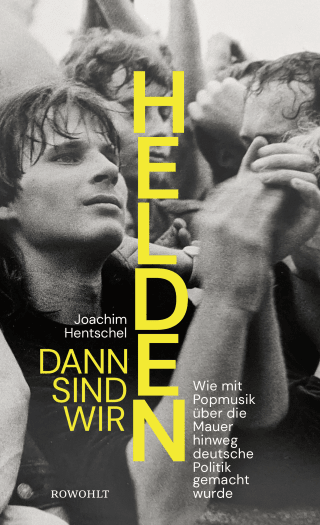
The sound of a historical turning point – reunification and the German music scene.
The Cold War was getting colder, the fight around the political-ideological broadcasting supremacy between East and West testier. But at the same time amazing things happened in the late 70s and 80s. German-German cultural exchange was set in serious motion – and, what’s more, in an area which was always considered particularly sensitive: pop and rock music. Bands from the GDR like City, Pankow and Puhdys were sent on their first tours of West Germany, and Karat appeared on the television show Wetten, dass…?, which caused hundreds of thousands of Deutschmark to flow to East Berlin. In exchange, artists from the West like Udo Lindenberg, Peter Maffay and Rio Reiser were allowed to play in the GDR, and Die Toten Hosen rocked Ostkirchen – almost legally. It was about propaganda and foreign currency, hidden messages and political manoeuvres.
For the first time, Joachim Hentschel tells the full story of this time, speaks to contemporary witnesses and examines the background: who were the puppet masters? What role did the Stasi, the GDR culture ministry, the youth organisation FDJ, Western record labels and impresarios play? And how much did the extensive cultural exchange play a role in reunification?